
Brake Repair Poway, San Diego | Expert Brake Service
Brake repair is the process of inspecting, diagnosing, and fixing parts of your vehicle’s braking system to restore safe stopping power. According to the National Highway Traffic Safety Administration, brake failure contributes to nearly 22% of all vehicle crashes annually. This guide explains what brake repair involves, how to recognize when your brakes need attention, and why choosing the right shop in Poway matters for your safety and budget.
Get answers to all your questions from our team of experts
Why Timely Brake Service Matters
Brakes keep your family safe and your vehicle in control. Waiting too long turns a simple pad replacement into a costly rotor or caliper repair. Our inspections catch issues early, saving you time and money. We measure pad thickness in millimeters, check rotor runout, inspect calipers, and test brake fluid health so you get clear answers not guesswork.
Common symptoms you shouldn’t ignore:
- Squealing or grinding when stopping
- Brake warning light or ABS light on
- Vibration or pulsation in the steering wheel or pedal
- Soft or spongy pedal feel
- The car pulls to one side when braking
- Burning smell after a downhill drive
If you notice any of these, book an appointment today.
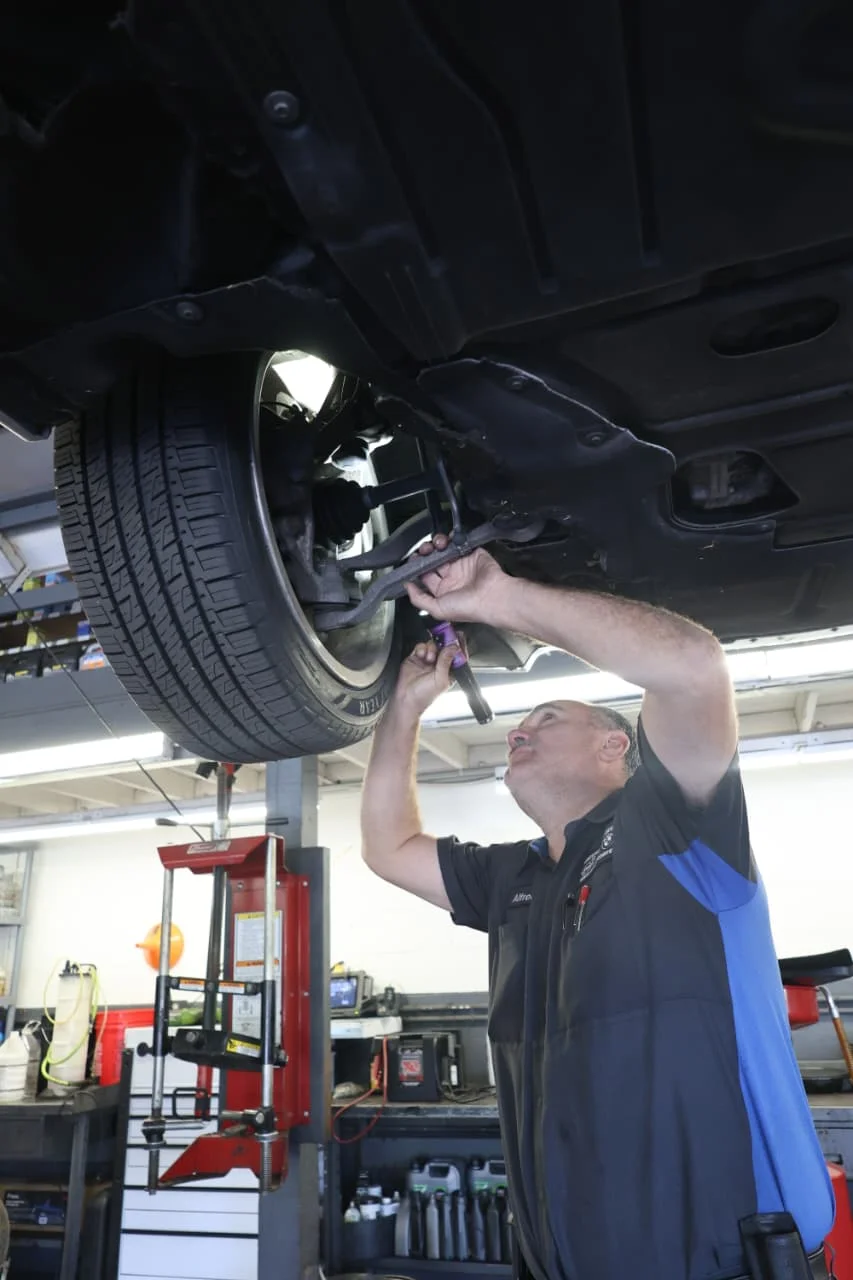
Our 360° Brake Inspection (Poway & San Diego)
Every brake service begins with a thorough, multi-point inspection:
- Pad and shoe thickness measurement (documented in mm)
- Rotor/drum surface condition and runout measurement
- Caliper and hardware evaluation (slides, pins, boots, hoses)
- Brake fluid test (moisture, copper content, contamination)
- Hydraulic system check for leaks and pedal feel
- ABS/ESC system scan and road test
You’ll receive a simple, written estimate with photos where helpful. No pressure, no surprises.
When Should I Replace My Brakes?
Often 30,000–70,000 miles, depending on driving habits and pad material. Hills, towing, and heavy traffic shorten the interval.
Replace when below the minimum thickness or if resurfacing can’t correct pulsation.
Test annually; exchange typically every 2–3 years or per manufacturer guidance.
Shorter trips and stop-and-go traffic wear brakes faster. If you hear squeals or feel pulsation, schedule a check today.
Brake Pad Replacement — Quiet, Clean, and Long-Lasting
We install high-quality pads that match your driving style—ceramic for quiet, low-dust commuting; semi-metallic for high-heat performance. Our brake jobs include new hardware when needed and rotor resurfacing or replacement to ensure smooth, even stopping.
What you get:
- Pads selected for your vehicle and use
- Cleaned and lubricated caliper slides
- Precisely torqued hardware to spec
- Rotor resurfacing or OE-grade rotor replacement
- Road test and bedding procedure instructions
EAC Poway delivers dependable results with warranties you can trust.
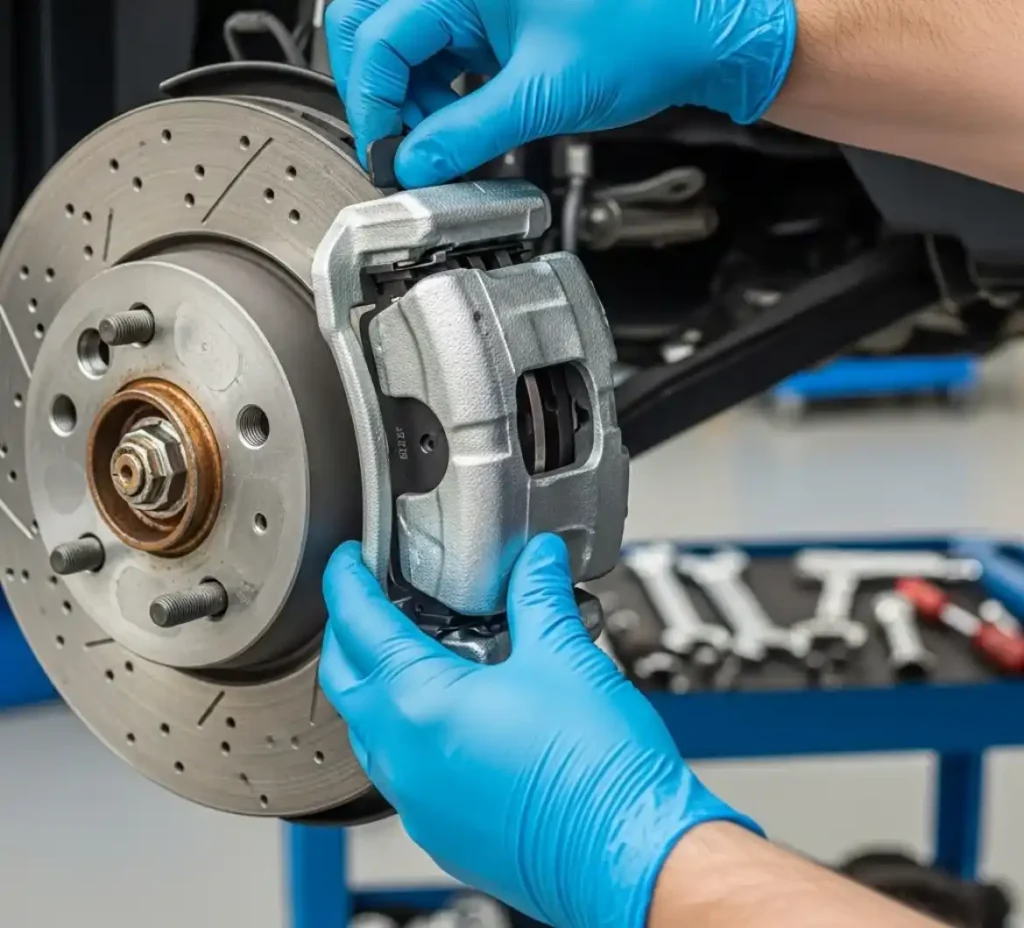
What Makes Us Different
- Local expertise: We service daily commuters and weekend mountain drivers alike.
- ASE-certified technicians: Trained on modern braking systems and ABS.
- Quality parts: OE or OE-equivalent pads, rotors, and fluid.
- Transparent pricing: Written estimates before work begins.
- Warranties: Many repairs come with 36 months / 36,000 miles parts & labor coverage (ask for details).
- Convenience: Comfortable lounge, Wi-Fi, shuttle/loaner options, and easy online booking.
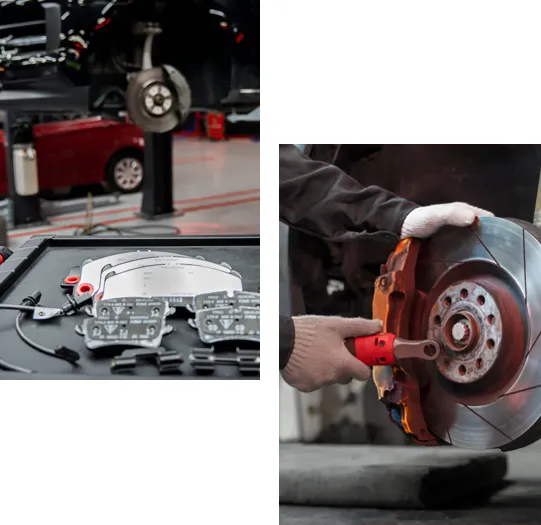
Our Brake Service Process (Simple & Clear)
Check-in & road test to confirm symptoms.
Full inspection with measurements and photos.
Written estimate with options (good/better/best where applicable).
Precision repair using the right parts for your vehicle.
Quality control, road test, and final torque checks.
Care tips to maximize pad and rotor life.
We keep you informed at every step.
Rotor Resurfacing & Replacement
Rotors take the heat. Warped or grooved rotors cause vibration, longer stopping distances, and uneven pad wear. We measure rotor thickness and runout, then recommend resurfacing (when within spec) or replacement with OE-grade rotors. The goal: smooth, consistent braking with no shake or chatter.
Brake Fluid Exchange (Hydraulic Health)
Moisture in brake fluid increases stopping distance and corrodes internal parts. If a fluid test shows contamination, we perform a complete exchange using the correct DOT fluid for your vehicle. Fresh fluid protects ABS modules, calipers, and seals and restores a firm pedal.
ABS & Brake Light Inspection — San Diego & Poway
If your brake light or ABS light is on, don’t wait. We scan for codes, test wheel speed sensors, and check the hydraulic control unit. Need documentation for title or repair verification? Our technicians provide exactly what you need and fix the root cause.
Brake Specials — Poway & San Diego
Ask about our seasonal specials. We often bundle pad replacement, rotor resurfacing, and a fluid exchange for extra value. Call or book online to see current deals. Unlike chain shops, EAC Poway offers certified technicians, warranty-backed repairs, and a personalized experience you won’t find elsewhere.
Related Services That Protect Your Brakes
Healthy braking depends on more than pads and rotors. Keep your system in top shape with:
Your brakes are too important to neglect. If you have noticed any warning signs or it has been more than a year since your last brake inspection, contact EAC Poway today. We provide thorough inspections, honest assessments, and quality repairs using parts that meet or exceed manufacturer specifications. Our certified technicians have the experience to handle brake service on all makes and models. Call us to schedule your appointment or stop by our Poway location. We serve the entire North County area with reliable brake repair services you can trust.
FAQ — Car Brake Service
Most brake pad replacements take one to two hours per axle. A complete brake job including rotors takes two to four hours. The actual time depends on your vehicle type and the specific repairs needed.
No. Worn brake pads damage rotors and reduce stopping power significantly. Driving with metal-on-metal contact is dangerous and will cost more to repair once rotors are damaged beyond resurfacing.
Not necessarily. Brakes should be replaced by axle (both front or both rear together) to maintain balanced braking. Front brakes typically wear faster than rear brakes due to weight transfer during stopping.
New brake pads often squeak initially during the break-in period as they settle against the rotors. This usually stops after a few hundred miles. Persistent squeaking may indicate glazed pads or missing anti-squeal shims.
Glazing occurs when brake pads overheat and develop a hard, smooth surface. This reduces friction and braking effectiveness. It happens from riding the brakes on long downhill grades or frequent hard stops without cooling.
Anticipate stops and brake gradually rather than hard. Coast to slow down when possible. Avoid riding the brakes on hills. Keep proper following distance. These habits reduce heat and wear on brake components.
Uneven heating and cooling cycles warp rotors. This happens from hard braking followed immediately by driving through water, which cools one section faster than another. Over-torqued lug nuts also contribute to warping.