
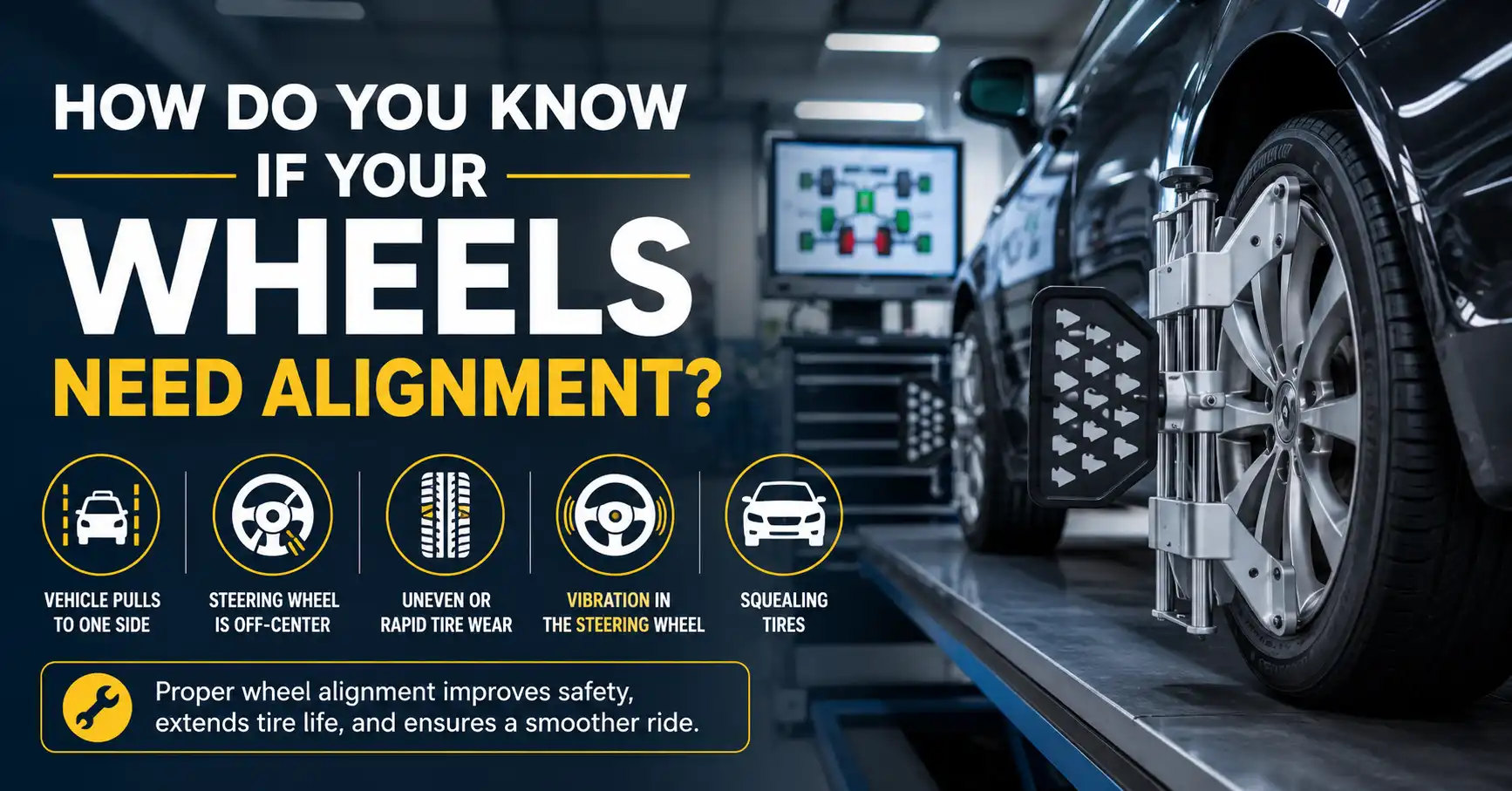
How Do You Know If Your Wheels Need Alignment?
Your car pulling to one side isn’t random. It’s often a clear sign your wheels are out of alignment. According to AAA, roughly 10% of vehicles on the road have alignment issues that affect fuel economy and tire life. Ignoring this can cost you hundreds in premature tire replacement and create real safety risks. This guide explains the warning signs, what causes misalignment, and how to fix it before it drains your wallet.
What Are the Most Common Signs Your Wheels Need Alignment?
Your vehicle shows alignment problems through steering pull, uneven tire wear, off-center steering wheel, and vibration. These symptoms worsen over time and directly affect your safety, fuel economy, and tire lifespan if ignored.
The steering wheel pulls to the left or right even on flat roads. You have to constantly correct to drive straight. That’s the most obvious sign. Your tires also tell the story. Look for uneven tread wear patterns like one edge wearing faster than the other.
The steering wheel sits crooked when you’re driving straight. It should sit centered. If it doesn’t, your alignment is off. You might also feel vibration in the steering wheel at certain speeds.
Steering Pull and Drift
Your car drifts to one side when you let go of the wheel briefly on a level road. This happens because the wheels point in slightly different directions. The pull gets worse over time as the misalignment increases.
Uneven or Rapid Tire Wear
Check your tire treads regularly. One shoulder wearing down faster than the center means camber misalignment. Feathering across the tread indicates toe problems. These patterns show up within a few thousand miles of misalignment.
Off-Center Steering Wheel
Drive on a straight road and look at your steering wheel. It should be level with the emblem centered. If it sits tilted left or right, your wheels aren’t pointing straight even though the car is.
Vibration While Driving
Misaligned wheels create uneven road contact. This causes vibration you’ll feel through the steering wheel and sometimes the seat. The vibration often gets worse at highway speeds.
What Causes Wheels to Go Out of Alignment?
Potholes, curb impacts, worn suspension parts, accidents, and normal wear cause alignment issues. Even minor impacts can knock wheels out of spec, and daily driving gradually loosens suspension components over time.
Hitting a pothole hard enough jars the suspension and shifts alignment angles. Curbs do the same damage when you misjudge parking or turn too sharply. These impacts are the leading cause of sudden misalignment.
Worn ball joints, tie rod ends, and control arm bushings allow wheels to shift position. As these parts age and loosen, they can’t hold alignment settings. Even small accidents that seem minor can bend suspension components.
Road Hazards and Impacts
San Diego roads have their share of potholes and uneven surfaces. One good hit can throw your alignment off instantly. Construction zones with sudden pavement changes also create impact points that damage alignment.
Worn Suspension Components
Springs sag over time. Bushings crack and compress. Ball joints develop play. These worn parts let wheels move beyond their intended positions. Regular auto repair poway San Diego CA inspections catch these issues early.
Vehicle Modifications
Installing lifted suspensions or oversized tires changes your vehicle’s geometry. Without proper alignment after modifications, you’ll see accelerated wear and handling problems. Even new wheels with different offsets can affect alignment.
How Often Should You Get a Wheel Alignment?
Get your alignment checked every 6,000 miles or once a year, whichever comes first. Also check after hitting major road hazards, installing new tires, or noticing any handling changes or uneven tire wear patterns.
Most manufacturers recommend alignment checks annually. But if you drive rough roads daily or have hit curbs or potholes, check sooner. Don’t wait for obvious symptoms to appear.
Always align when installing new tires. Starting with proper alignment maximizes their lifespan. You’ll also want alignment checked after any suspension work or brake repair san diego that involves removing steering or suspension components.
| Service Interval | Recommended Action |
| Every 6,000 miles | Alignment inspection |
| After new tire installation | Full four-wheel alignment |
| After pothole/curb impact | Immediate alignment check |
| After suspension repairs | Alignment adjustment |
What Happens If You Drive With Bad Alignment?
Driving with misalignment causes rapid uneven tire wear, reduced fuel economy up to 7%, poor handling, and increased stopping distances. It compromises safety and can cost you hundreds in premature tire replacement and repairs.
Your tires wear out faster and unevenly. You might need replacement at 20,000 miles instead of 50,000 miles. That’s a $400-$800 loss right there. Fuel economy drops because misaligned wheels create rolling resistance.
Handling suffers significantly. Your car won’t respond predictably in emergency maneuvers. Braking distances increase because tires don’t maintain optimal road contact. This creates genuine safety risks for you and other drivers.
Can You Fix Wheel Alignment Yourself?
DIY wheel alignment is possible with proper tools and knowledge, but professional equipment provides precision within 1/100th of a degree that prevents costly mistakes. Most drivers save money and time with professional wheel alignment poway san diego service.
Home alignment requires measuring tools, alignment specs for your vehicle, and understanding of camber, caster, and toe angles. You’ll need a level surface and considerable time. Small errors multiply into handling problems and accelerated wear.
Professional shops use computerized alignment racks that measure all angles simultaneously. They adjust to manufacturer specifications and provide printouts showing before and after measurements. The cost typically runs $75-$150, which is reasonable considering the precision and warranty.
What’s the Difference Between Two-Wheel and Four-Wheel Alignment?
Two-wheel alignment adjusts only front wheels and costs less but suits older vehicles with solid rear axles. Four-wheel alignment adjusts all wheels independently and is necessary for modern vehicles with independent rear suspension for optimal handling and tire wear.
Two-wheel alignment works for vehicles where the rear axle is fixed and can’t be adjusted. This includes many older trucks and rear-wheel-drive cars. The technician sets the front toe and camber to spec.
Four-wheel alignment measures and adjusts all four corners. Modern cars need this because independent rear suspension can shift out of spec just like the front. The service costs $20-$40 more but ensures the entire vehicle tracks straight. Issues with components like the Car Drive Shaft Repair in Poway can also affect alignment and handling.
Frequently Asked Questions
How long does a wheel alignment take?
A standard alignment takes 30-60 minutes at most shops. If technicians find worn suspension parts that need replacement first, expect 2-3 hours total for the complete service.
Will alignment fix my steering wheel vibration?
Alignment fixes vibration caused by wheels pointing in different directions. But vibration from unbalanced tires or bent wheels requires separate tire balancing or wheel repair services to resolve completely.
Do I need alignment after replacing struts?
Yes, always get alignment after replacing struts, shocks, or any suspension components. The installation process changes suspension geometry and angles that affect wheel positioning and tire wear patterns.
Can alignment damage be covered by warranty?
Most alignments aren’t covered unless caused by defective parts. But if a manufacturing defect in suspension components caused the misalignment, warranty might cover the parts replacement and subsequent alignment service.
How do I know if my alignment shop is reputable?
Look for shops with computerized alignment equipment, ASE-certified technicians, and before-and-after printouts showing exact measurements. They should also offer a warranty on the alignment work performed.
Does tire rotation affect alignment?
Tire rotation doesn’t change alignment, but it’s a good time to check it. Rotating tires with existing alignment problems just moves the uneven wear to different positions without fixing the root cause.
What alignment angles matter most?
Toe affects tire wear most directly and causes the fastest deterioration when wrong. Camber impacts handling and tire contact. Caster affects steering feel and stability but rarely causes significant tire wear issues.