4 Reasons Your Check Engine Light Is On
You glance at your dashboard mid-commute, and there it is: that orange glow staring back at you. Your check engine light just turned on. Maybe the car feels fine. Maybe it’s running rough. Either way, you’re left wondering what just happened and whether you should pull over right now.
According to CarMD’s 2023 Vehicle Health Index, over 10% of vehicles on U.S. roads have an active check engine light. That’s millions of drivers dealing with the same uncertainty you might be facing right now.
This article explains the four most common reasons your check engine light comes on, what each one means for your vehicle, and when you should act quickly. You’ll also learn how professional diagnostics work and why guessing rarely solves the problem.
What Does the Check Engine Light Actually Tell You?
The check engine light is your car’s way of flagging a problem detected by onboard sensors. It doesn’t pinpoint the exact issue, but it stores a diagnostic trouble code that helps technicians identify which system needs attention.
Modern vehicles run constant self-checks. Sensors monitor everything from oxygen levels in the exhaust to fuel pressure and ignition timing. When something falls outside normal range, the engine control module logs a code and triggers the warning light.
A solid light usually means the issue isn’t immediately damaging. A flashing light signals an active misfire that can damage your catalytic converter if you keep driving. That’s when you should stop and call for help.
Why Is My Check Engine Light On? The Top 4 Causes
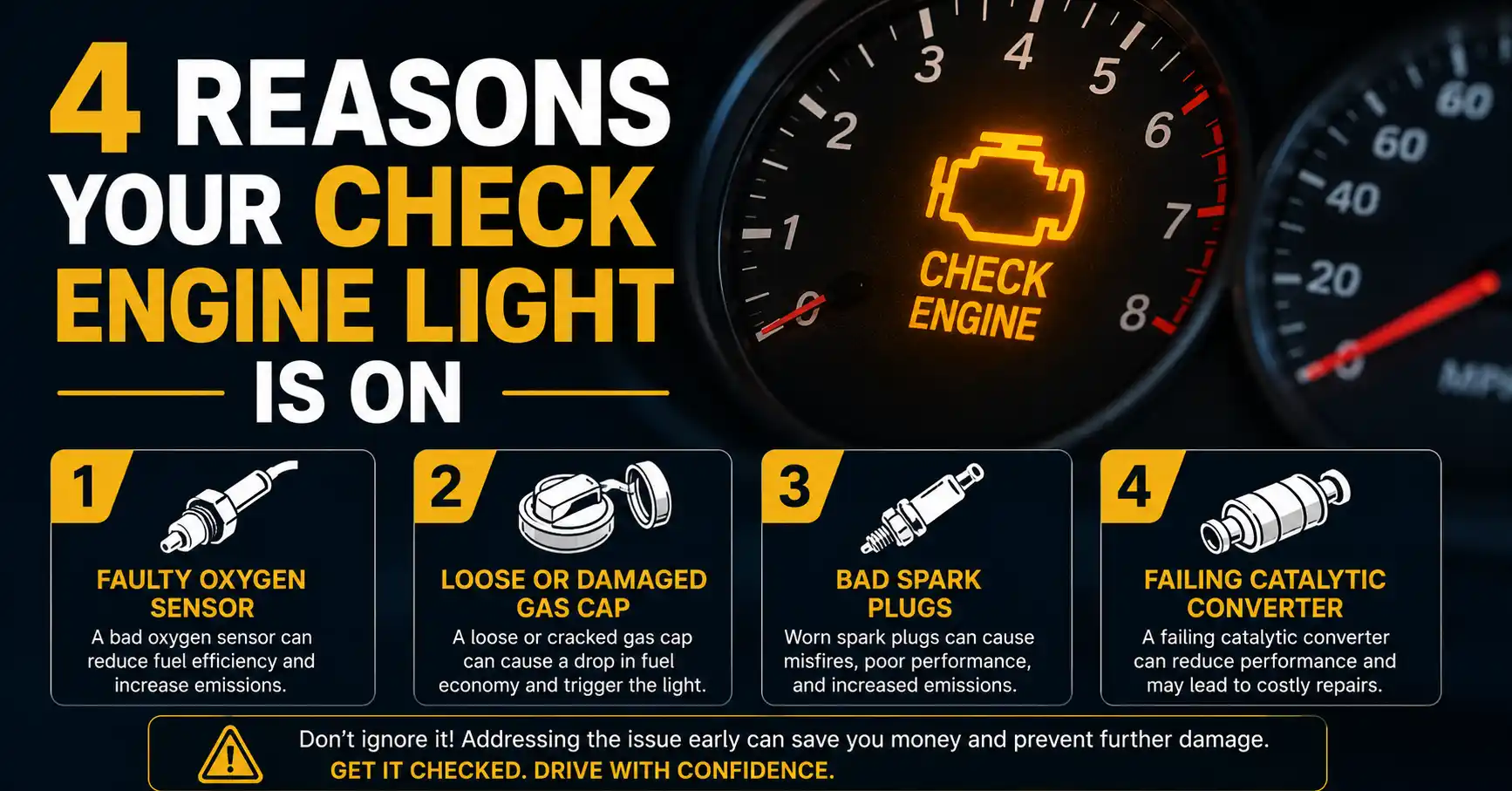
Most check engine lights trace back to four root causes: oxygen sensor failure, loose or faulty gas cap, catalytic converter issues, and mass airflow sensor problems. Each affects different systems but all share one thing in common—they disrupt how your engine manages fuel, air, or emissions.
1. Faulty Oxygen Sensor
Your oxygen sensor measures unburned oxygen in the exhaust. This data helps the engine control module adjust the fuel mixture for efficient combustion. When the sensor fails, your car can’t optimize fuel delivery.
Symptoms include rough idling, poor acceleration, and reduced fuel economy. Left unchecked, a bad O2 sensor can damage your catalytic converter, turning a $200 repair into a $1,500 problem.
Replacement is straightforward. A qualified technician will confirm the sensor is faulty using live data scans before swapping it out. If you’re in San Diego and need reliable Car Engine Repair in Poway, San Diego, proper diagnostics prevent unnecessary part replacements.
2. Loose or Damaged Gas Cap
It sounds simple, but a loose gas cap triggers the check engine light more often than most drivers expect. The cap seals your fuel system. When it’s loose, cracked, or missing, fuel vapors escape and the evaporative emission control system detects a leak.
This won’t hurt your engine immediately, but it wastes fuel and increases emissions. Tighten the cap until it clicks. If the light stays on after a day or two of driving, the cap may need replacement or there’s a deeper EVAP system issue.
Sometimes the problem isn’t the cap at all. A clogged fuel injector can mimic similar symptoms. That’s where professional Car Injector Cleaning helps restore proper fuel delivery.
3. Failing Catalytic Converter
The catalytic converter reduces harmful emissions by converting exhaust gases into less toxic substances. When it fails, your car can’t pass emissions tests and performance drops noticeably.
Common signs include sluggish acceleration, reduced fuel economy, and a sulfur-like smell from the exhaust. Catalytic converter failure often results from neglected maintenance elsewhere—like ignoring a bad oxygen sensor or running the engine with misfires.
Replacement costs vary, but expect $1,000 to $2,500 depending on your vehicle. Prevent this by addressing check engine lights early and keeping up with routine maintenance. If you’re already hearing unusual exhaust noises, check out Car Exhaust Repair services before the damage spreads.
4. Mass Airflow Sensor Malfunction
The mass airflow sensor measures how much air enters the engine. That information tells the computer how much fuel to inject. When the sensor gets dirty or fails, the fuel-to-air ratio goes off balance.
You’ll notice hesitation during acceleration, rough idling, or even stalling. Sometimes the engine runs fine at idle but stumbles under load. Cleaning or replacing the MAF sensor usually solves it.
Transmission issues can produce similar drivability problems, so proper diagnostics matter. If you suspect something beyond the MAF sensor, consider a full inspection through Car Transmission Repair in Poway.
What Should You Do When the Light Turns On?
When your check engine light comes on, note whether it’s solid or flashing, pay attention to any changes in how the car drives, and schedule a diagnostic scan as soon as practical.
A solid light means you can usually drive to a repair shop without immediate danger. A flashing light means stop driving and get help right away. Continuing to drive with an active misfire can destroy your catalytic converter within minutes.
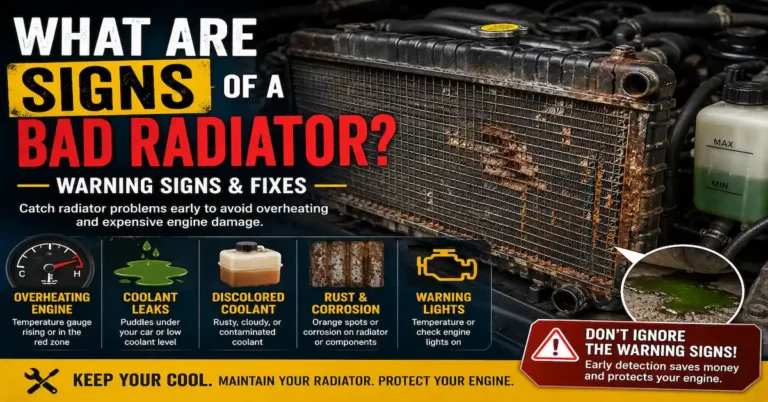
Don’t ignore the light hoping it goes away. Even if the car seems fine, small problems grow into expensive repairs when left unchecked. Overheating from a failing radiator, for example, can warp your engine block. That’s why Car Radiator Repair matters before the damage compounds.
How Do Mechanics Diagnose Check Engine Light Issues?
Professional diagnostics start with an OBD-II scanner. This tool reads the trouble codes stored in your car’s computer. But the code only points to the system with the problem—it doesn’t tell you the root cause.
A good technician will pull the codes, check live data from the sensors, and perform physical tests to confirm what failed. They might test fuel pressure, check for vacuum leaks, inspect wiring, or measure sensor outputs directly.
This process takes time, but it’s the only way to avoid throwing parts at the problem. Shops that skip this step end up replacing components that weren’t broken, wasting your money and leaving the real issue unfixed.
Can You Drive With the Check Engine Light On?
It depends. A solid light with no noticeable performance issues usually means you can drive short distances to get the car checked. But don’t put it off for weeks.
A flashing light is different. That indicates an active misfire severe enough to damage the catalytic converter. Pull over safely and have the car towed if needed.
Even if the light turns off on its own, the code stays stored in the system. Intermittent problems still need attention because they often come back worse. If you’re looking for trusted auto repair in poway ca, don’t wait until small issues become major failures.
Common Myths About the Check Engine Light
Myth one: the light always means something expensive. Not true. Sometimes it’s a loose gas cap or a sensor that needs cleaning. But ignoring it can turn a cheap fix into a costly one.
Myth two: disconnecting the battery clears the problem. It clears the light temporarily, but the issue remains. The light will return once the system runs its checks again.
Myth three: auto parts stores can fix it for free. They can read the code, but reading isn’t diagnosing. You still need a qualified technician to confirm what’s actually wrong.
Frequently Asked Questions
How much does it cost to diagnose a check engine light?
Most shops charge between $50 and $150 for a diagnostic scan and interpretation. Some waive the fee if you proceed with the repair.
Will the check engine light reset itself?
Sometimes, if the issue was temporary. But the code stays stored in the system, and the light will return if the problem persists.
Can I pass emissions with the check engine light on?
No. An active check engine light is an automatic fail in most states. You’ll need to fix the issue and drive enough for the monitors to reset before retesting.
Is it safe to drive with the check engine light on?
A solid light usually means you can drive cautiously to a repair shop. A flashing light means stop immediately to avoid engine damage.
What happens if I ignore the check engine light?
You risk turning a minor issue into a major failure. Ignoring a bad oxygen sensor, for example, can ruin your catalytic converter and cost you thousands.
Can a check engine light turn on for no reason?
Rarely. The system only triggers the light when it detects a fault. Even if the car seems fine, something caused the code to store.
How long can I drive with the check engine light on?
It depends on the cause. Some issues allow short-term driving, but you should get it checked within a few days to prevent further damage.