What Are Signs That Synthetic Oil Needs Changing?
Synthetic oil doesn’t last forever. Most drivers think synthetic means “set it and forget it,” but that’s not how engines work. Your oil breaks down from heat, pressure, and contaminants no matter what type you use. Knowing when to change it prevents engine damage that costs thousands to repair.
According to AAA research, 22% of drivers don’t know their recommended oil change interval, and many wait too long between services. Your engine depends on clean oil to reduce friction, control heat, and protect metal components. When oil degrades, your engine starts showing symptoms you shouldn’t ignore.
This guide covers the specific warning signs that your synthetic oil needs changing, how to check oil condition yourself, and why ignoring these signals damages your engine. You’ll know exactly what to look for and when to take action.
How Do You Know When Synthetic Oil Needs Changing?
Check your dashboard for maintenance lights, inspect oil color and texture with the dipstick, and monitor unusual engine sounds or smells. Most synthetic oils last 7,500-15,000 miles, but driving conditions and oil quality affect this significantly. Your owner’s manual provides the exact interval for your vehicle.
Dashboard Warning Lights Appear
Modern vehicles have oil life monitoring systems that track mileage, temperature, and driving patterns. When the oil change light or service reminder illuminates, it’s calculating that your oil has reached the end of its useful life. Some cars show a percentage—when it hits 15% or lower, schedule service soon.
The check engine light also appears when oil-related problems occur. Low oil pressure, contaminated oil, or oil flow issues trigger this warning. Don’t assume it’s always the oil, but it’s one common cause worth investigating immediately.
Oil Looks Dark or Gritty
Fresh synthetic oil appears amber or light brown. Pull your dipstick and wipe it on a white paper towel. If the oil looks black, muddy, or contains visible particles, it’s saturated with contaminants and combustion byproducts.
That darkness means the oil can’t lubricate effectively anymore. The additives have broken down, and the oil is carrying debris that shouldn’t be circulating through your engine. This is one of the clearest visual signs you need an oil change.
Engine Makes Unusual Noises
Old oil loses viscosity and can’t maintain the protective film between metal parts. You’ll hear knocking, ticking, or rumbling sounds, especially during cold starts or acceleration. These noises mean metal components are making direct contact.
If your engine sounds louder than normal or develops new sounds, check the oil immediately. Ignoring these noises leads to worn bearings, damaged pistons, and eventual engine repair San Diego shops see all the time—usually at major expense.
Exhaust Smoke Increases
Blue or gray smoke from your tailpipe indicates oil is burning in the combustion chamber. This happens when old oil thins out and seeps past worn piston rings. Black smoke suggests the engine is running too rich, which can also relate to oil quality affecting sensor readings.
Some smoke on cold mornings is normal, but continuous smoke signals a problem. Combined with low oil levels, this symptom requires immediate attention before you damage the engine permanently.
You Smell Burning Oil Inside the Cabin
A burnt oil smell inside your car means oil is leaking onto hot engine components or the engine is overheating. Old oil doesn’t regulate temperature as well, allowing metal parts to get hotter than designed.
This smell is distinct—acrid and unpleasant. If you notice it, pull over safely and check your oil level. Running an engine low on oil or with degraded oil creates heat that warps metal and destroys gaskets.
Fuel Economy Drops Noticeably
Degraded oil increases internal friction, forcing your engine to work harder. That extra work burns more fuel. If your gas mileage has dropped by 10-15% without other obvious causes, your oil might be the culprit.
Clean oil helps engines run efficiently. When oil breaks down, the engine struggles, and you feel it at the pump. Changing the oil often restores normal fuel economy immediately.
What Factors Affect Synthetic Oil Life?
Severe driving conditions shorten oil life regardless of the oil type. Stop-and-go traffic, frequent short trips under five miles, extreme temperatures, towing, and dusty environments all accelerate oil breakdown. Your owner’s manual usually lists two service intervals: normal and severe.
Most people actually drive under severe conditions without realizing it. Daily commutes with lots of idling, quick grocery runs where the engine never fully warms, and hot summer temperatures all count. Using the severe service schedule prevents problems even if you use premium synthetic oil.
| Driving Condition | Effect on Oil Life | Recommended Interval Adjustment |
| Stop-and-go traffic | Increases contamination and prevents oil from reaching optimal temperature | Reduce interval by 25-30% |
| Short trips under 5 miles | Moisture doesn’t evaporate, causing sludge buildup | Follow severe service schedule |
| Extreme heat or cold | Accelerates thermal breakdown or thickens oil | Change 1,000-2,000 miles earlier |
| Towing or hauling | Increases engine stress and oil temperature | Follow severe service schedule |
Can You Check Synthetic Oil Condition Yourself?
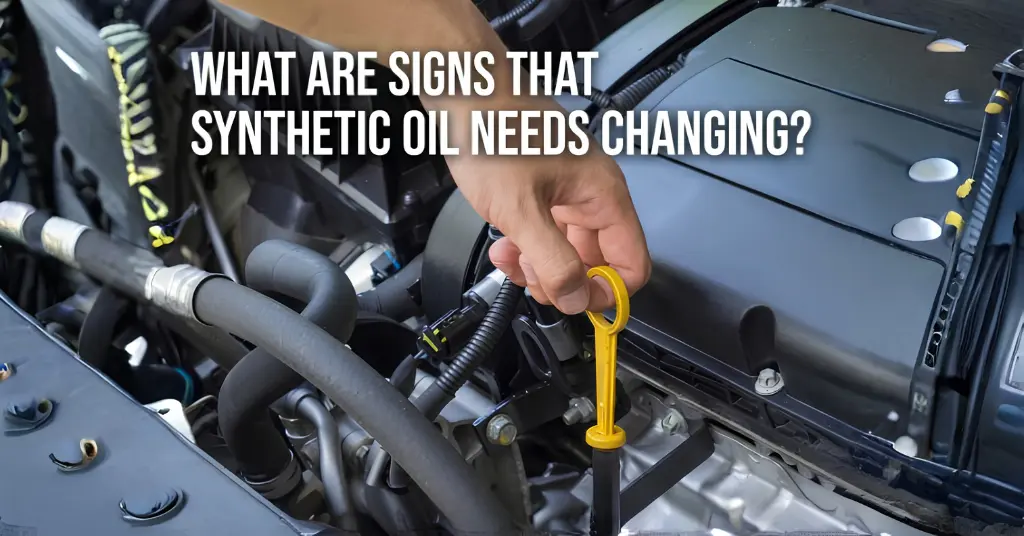
Yes, checking oil condition takes less than five minutes. Park on level ground, let the engine cool for a few minutes, then pull the dipstick. Wipe it clean, reinsert it fully, and pull it out again to check the level and appearance.
Look at the color and texture. Rub a bit between your fingers—if it feels gritty or you see particles, the oil is contaminated. Smell it too. Burnt or acrid odors mean thermal breakdown. These simple checks tell you what’s happening inside your engine.
Pro Tip: Check your oil every month even with synthetic. Catching problems early prevents expensive repairs and keeps your engine healthy between service visits.
Why You Shouldn’t Ignore Synthetic Oil Change Intervals
Skipping or delaying oil changes creates sludge—a thick, tar-like substance that clogs oil passages and starves engine components of lubrication. Modern engines have tight tolerances and small oil passages that clog easily. Once sludge forms, it’s difficult to remove without professional cleaning or engine disassembly.
Sludge buildup leads to timing chain problems, turbocharger failure, and valve train wear. These repairs cost significantly more than routine maintenance. Some manufacturers void warranties when owners don’t follow the maintenance schedule, leaving you paying out of pocket for preventable damage.
What Happens During a Professional Synthetic Oil Change?
A proper oil change includes draining old oil completely, replacing the oil filter, and refilling with the manufacturer-specified oil type and quantity. Technicians at Poway auto repair shops also perform multi-point inspections, checking fluid levels, tire pressure, and visible component condition.
The oil filter captures contaminants, so changing it with every oil service is essential. A clogged filter forces oil to bypass filtration, circulating dirty oil through your engine. Quality shops use OEM or equivalent filters, not cheap alternatives that fail prematurely.
Professional service includes proper disposal of used oil and documentation of the service for warranty purposes. You’ll also get a reminder sticker showing your next service mileage, though dashboard monitoring systems provide more accurate timing based on actual driving conditions.
How Does Synthetic Oil Differ From Conventional Oil?
Synthetic oil is engineered at the molecular level for consistent performance, while conventional oil is refined from crude petroleum with natural variations. Synthetic molecules are uniform in size and shape, providing better flow in cold weather and stability in high heat. This is why synthetic oil lasts longer between changes.
But “lasts longer” doesn’t mean forever. Additives in synthetic oil still deplete, and the oil still collects contaminants from combustion and normal wear. The base oil might remain stable, but the additive package that provides corrosion protection, detergency, and viscosity modification wears out.
That’s why even vehicles using full synthetic oil need regular changes. The 15,000-mile intervals some manufacturers recommend assume ideal driving conditions—something few drivers actually experience consistently.
Does Your Driving Style Affect Oil Change Frequency?
Aggressive driving—hard acceleration, high RPMs, and sustained high speeds—generates more heat and stress on oil. Racing or spirited driving breaks down oil faster than gentle commuting. If you drive aggressively, shorten your oil change interval by 20-30%.
Conversely, highway driving at steady speeds is easier on oil than city driving. Long highway trips allow the engine to reach and maintain optimal temperature, burning off moisture and contaminants. That’s the “normal” service condition most manuals reference, though it’s less common than manufacturers assume.
Frequent Questions About Synthetic Oil Changes
How often should you change synthetic oil?
Most manufacturers recommend 7,500 to 15,000 miles for synthetic oil changes, but check your owner’s manual for the exact interval. Severe driving conditions require more frequent changes, typically every 5,000-7,500 miles, regardless of oil type.
Can synthetic oil last 20,000 miles?
Some extended-life synthetic oils claim 20,000-mile intervals, but this only applies under ideal conditions with specific engine designs. Most engines still need changes by 15,000 miles maximum. Longer intervals risk additive depletion and contamination buildup that damages engines.
What happens if you go too long between oil changes?
Overdue oil changes cause sludge formation, increased wear on bearings and pistons, and potential engine seizure. You’ll notice louder operation, reduced performance, and eventually warning lights or complete engine failure requiring replacement or extensive transmission repair San Diego level costs.
Is it bad to change synthetic oil early?
No. Changing oil early never hurts your engine and provides extra protection. If you’re uncertain about oil condition or you drive in severe conditions, earlier changes offer peace of mind and prevent problems. The only downside is slightly higher maintenance costs.
Does synthetic oil go bad if you don’t drive much?
Yes. Oil degrades from time even if you don’t drive many miles. Moisture accumulation, oxidation, and additive depletion occur regardless of mileage. Change your oil at least once yearly even if you haven’t reached the mileage interval, especially in humid climates.
Can you mix synthetic and conventional oil?
Mixing won’t damage your engine, but it reduces the benefits of synthetic oil. If you’re low on oil and need to top off, mixing is acceptable temporarily. However, stick to one oil type consistently for best results, and use the grade your manufacturer specifies.
Your Engine Depends on Timely Oil Changes
Synthetic oil gives you longer intervals and better protection, but it’s not maintenance-free. Watch for warning signs, follow your service schedule, and adjust for how you actually drive. Catching oil problems early keeps your engine running smoothly and saves you from repairs that cost exponentially more than preventive maintenance.
When dashboard lights illuminate, oil looks dark, or you notice performance changes, don’t wait. Schedule service with a trusted shop that uses quality oil and filters. Your engine will last longer, run better, and cause fewer headaches when you stay on top of this simple maintenance task.