What Are Signs of a Bad Radiator?
Your car’s radiator sits at the heart of the cooling system. When it starts to fail, the engine doesn’t just run hot. It risks serious damage that can cost thousands to repair.
According to the Car Care Council, overheating causes nearly 40% of all engine failures in the United States. Most of these stem from radiator and cooling system issues that drivers ignore until it’s too late. Catching a failing radiator early saves you money and keeps your vehicle running safely. This guide shows you exactly what to watch for.
How Do You Know If Your Radiator Is Failing?
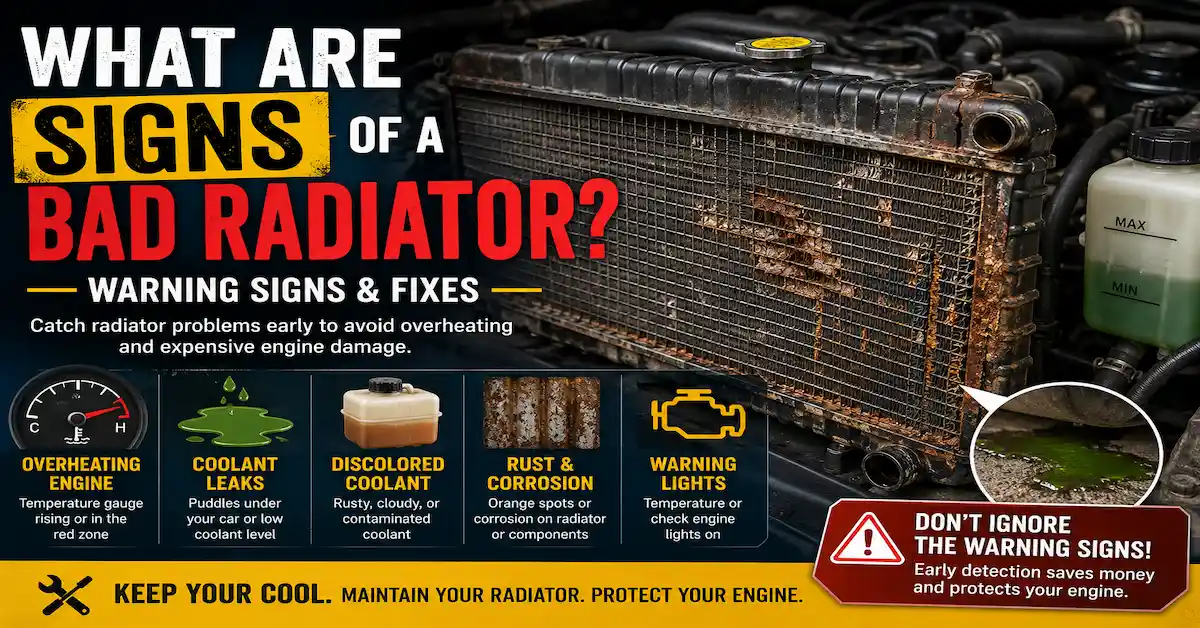
A failing radiator shows clear warning signs before it completely breaks down. Look for coolant leaks under your car, rising temperature gauges, discolored coolant, or visible rust on the radiator itself. These symptoms mean your cooling system can’t do its job properly.
Overheating Engine
The temperature gauge climbing into the red zone is the most obvious sign. Your radiator can’t pull enough heat away from the engine when it’s clogged or damaged.
You might notice the gauge creeping up during stop-and-go traffic or on hot days. That’s when your cooling system works hardest. If you see steam coming from under the hood, pull over immediately and turn off the engine.
Coolant Leaks
Green, yellow, or orange puddles under your car point straight to coolant leaks. These often start small but grow worse over time.
Check your driveway or parking spot each morning. Fresh coolant has a sweet smell and bright color. Leaks usually come from cracked radiator tanks, worn hoses, or corroded seams.
Discolored or Contaminated Coolant
Healthy coolant stays bright and clean. When it turns rusty brown, milky, or thick with particles, something’s wrong inside your radiator.
This discoloration means rust and scale are breaking loose. Those particles clog narrow passages and reduce cooling efficiency. A quick look at your overflow tank tells you a lot.
What Physical Signs Appear on a Bad Radiator?
Physical damage to your radiator is often visible if you look under the hood. Rust, corrosion, bent fins, and cracked plastic tanks all signal problems. These issues reduce your radiator’s ability to cool the engine effectively.
Rust and Corrosion
Rust forms when moisture and metal meet over time. You’ll see orange or brown spots on the radiator surface, especially around seams and joints.
Corrosion weakens the metal and creates tiny holes. These holes let coolant escape slowly at first, then faster as they grow. Any visible rust means you should have a radiator repair san diego technician inspect it soon.
Damaged or Bent Fins
Radiator fins are thin metal strips that help dissipate heat. Road debris, pressure washing, or minor impacts can bend them.
Bent fins block airflow through the radiator. Less airflow means less cooling capacity. While a few bent fins won’t cause immediate problems, widespread damage affects performance noticeably.
Cracked Plastic Tanks
Many modern radiators use plastic end tanks. These crack from heat cycles and age, usually after five to ten years.
Look for hairline cracks or seepage around the tank edges. Plastic doesn’t rust, but it does become brittle. Once cracks start, replacement is your only real option.
What Warning Lights Indicate Radiator Problems?
Dashboard warning lights give early alerts about cooling system failures. The temperature warning light and check engine light both can signal radiator issues. Don’t ignore these warnings even if your car seems to run normally.
| Warning Light | What It Means | Action Needed |
| Temperature Warning | Engine is too hot | Stop driving immediately |
| Check Engine | Sensor detected issue | Get diagnostic scan |
| Low Coolant | Coolant level dropped | Check for leaks |
How Does a Bad Radiator Affect Performance?
A failing radiator doesn’t just cause overheating. It creates a chain reaction of problems throughout your vehicle. Poor heater performance, reduced fuel economy, and sluggish acceleration all connect to cooling system failures.
When your engine runs too hot, the computer pulls back timing and fuel to protect components. That makes your car feel slower and less responsive. The heater stops blowing hot air because there’s not enough hot coolant circulating.
Pro Tip: If your heater stops working in winter while your temperature gauge reads normal, you might have a clogged radiator or stuck thermostat.
When Should You Replace Your Radiator?
Most radiators last between eight and ten years under normal conditions. Replace yours sooner if you see multiple warning signs or if repair costs approach replacement costs.
A trusted poway auto shop can help you decide between repair and replacement. Minor leaks and clogged passages often respond to professional cleaning and repair. Major damage like cracked tanks or widespread corrosion means you need a new radiator.
High-end vehicles like those needing mercedes or lexus repair san diego services might use specialized radiators that cost more but last longer. The investment protects your engine from catastrophic damage.
Can You Prevent Radiator Failure?
Regular maintenance keeps your radiator healthy for years. Flush your cooling system every 30,000 miles or as your manufacturer recommends. This removes rust, scale, and old coolant before they cause problems.
- Check coolant level monthly
- Inspect hoses for cracks or soft spots
- Watch for leaks in your parking area
- Keep radiator fins clean and straight
- Use the correct coolant type for your vehicle
Mix coolant with distilled water, not tap water. Minerals in tap water accelerate corrosion inside your cooling system.
Frequently Asked Questions
How much does it cost to replace a radiator?
Radiator replacement typically costs between $300 and $900 depending on your vehicle make and model. Labor accounts for about half that cost. Luxury vehicles and trucks often cost more due to larger radiators and difficult access.
Can I drive with a bad radiator?
No, driving with a failing radiator risks severe engine damage. Overheating can warp cylinder heads, blow head gaskets, or crack the engine block. These repairs cost thousands of dollars compared to a few hundred for radiator work.
How long does a radiator repair take?
Simple radiator repairs take two to four hours. Complete replacement usually requires four to six hours including draining, removal, installation, and refilling. Your mechanic needs extra time if other cooling system parts need attention.
What’s the difference between radiator fluid and coolant?
These terms mean the same thing. Coolant is the liquid mixture that flows through your radiator and engine. It’s typically antifreeze mixed with water at a 50/50 ratio to prevent freezing and boiling.
Will a bad radiator cause my AC to stop working?
Not directly, but a failing radiator makes your engine overheat. This forces you to turn off the AC to reduce engine load. Some cars automatically disable AC when the engine reaches dangerous temperatures.
Can I fix a radiator leak myself?
Minor leaks sometimes respond to stop-leak additives temporarily. But these are short-term fixes that can clog your heater core. Physical damage like cracks and rust requires professional repair or replacement for lasting results.
Why does my radiator smell sweet?
That sweet smell is ethylene glycol from your coolant. You’re smelling it because coolant is leaking somewhere in your cooling system. Even small leaks create noticeable odors, especially when the engine is hot.
Your radiator works hard every time you drive. Catching problems early keeps small issues from becoming expensive failures. Watch for the warning signs, maintain your cooling system regularly, and address problems quickly when they appear.