What Are the Signs of Engine Failure?
Engine failure is when your vehicle’s motor stops working properly or quits completely. Your engine might give you plenty of warnings before it fails, or it might surprise you on the highway. Either way, catching problems early saves you thousands of dollars and prevents dangerous breakdowns.
According to AAA, engine-related issues account for approximately 35% of all roadside assistance calls in the United States. That’s roughly one in three breakdowns. Most of these failures showed warning signs weeks or months before the engine quit. This guide shows you exactly what to watch for and when to get help from a qualified poway auto repair shop.
You’ll learn the seven most common engine failure symptoms, what causes them, and what to do when you spot trouble. Some signs mean you need immediate attention. Others give you time to schedule repairs. Knowing the difference keeps you safe and saves money.
Why Does the Check Engine Light Turn On?
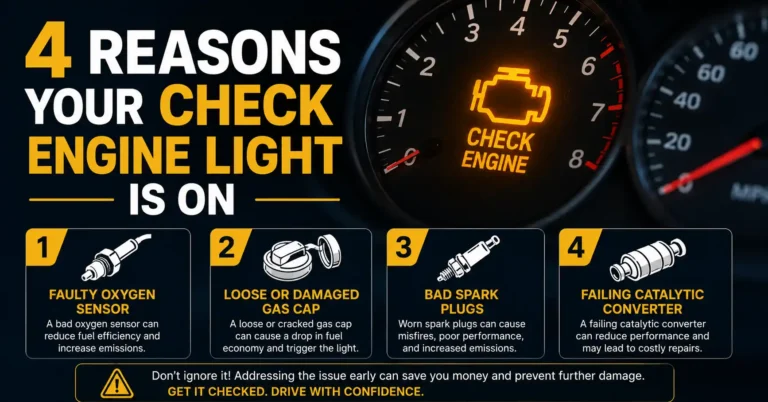
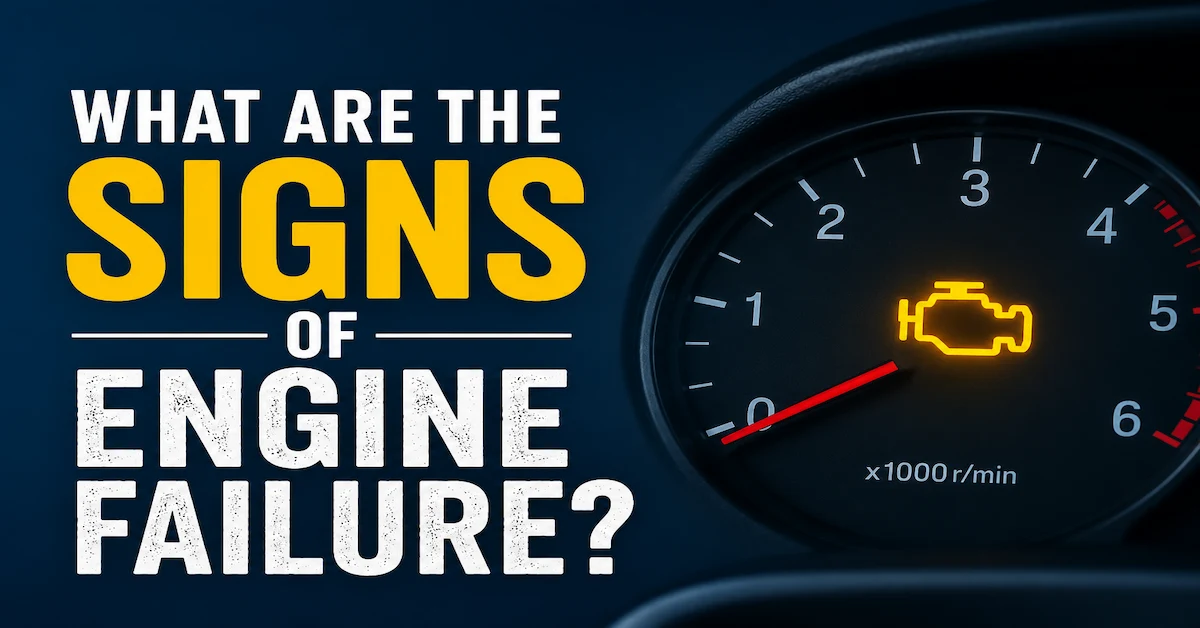
The check engine light illuminates when your vehicle’s computer detects a problem with emissions, fuel delivery, or engine operation based on sensor readings that fall outside normal parameters.
Your dashboard has one warning light you should never ignore. That amber engine symbol connects to dozens of sensors throughout your car. When something goes wrong, the onboard computer logs a diagnostic trouble code and triggers the light.
A steady check engine light means the problem isn’t critical yet. You have time to schedule a diagnostic test. A flashing check engine light is urgent. This usually indicates engine misfires that can damage your catalytic converter within minutes. Pull over safely and call for help.
Modern vehicles use OBD-II diagnostic systems. These systems monitor everything from oxygen sensors to transmission performance. A mechanic plugs a scanner into your car’s diagnostic port and reads the exact fault codes. This tells them where to start looking.
Pro Tip: Many auto parts stores offer free code reading. But reading the code isn’t the same as diagnosing the problem. A professional engine repair technician interprets those codes and tests the actual components.
Common Check Engine Light Triggers
- Loose or damaged gas cap (simplest fix)
- Failing oxygen sensors
- Catalytic converter issues
- Mass airflow sensor problems
- Spark plug or ignition coil failures
- Vacuum leaks
What Does Engine Overheating Mean?
Engine overheating occurs when coolant can’t absorb and dissipate heat properly, causing temperatures to exceed 220°F and potentially warping metal components or cracking the engine block.
Your temperature gauge should sit somewhere in the middle range. When that needle climbs toward the red zone, your engine is too hot. Overheating damages internal parts fast. Cylinder heads can warp. Head gaskets can blow. In extreme cases, the engine block itself can crack.
Watch your temperature gauge during drives. If it creeps up, turn off the air conditioning and turn on the heater full blast. This pulls heat away from the engine. If the gauge hits the red zone, pull over immediately and shut off the engine.
Overheating usually stems from cooling system failures. Low coolant levels, broken thermostats, failed water pumps, or clogged radiators all cause temperature spikes. White smoke from the exhaust often accompanies overheating and signals coolant burning in the combustion chamber.
Overheating Warning Signs
| Sign | What It Means | Urgency |
| Rising temperature gauge | Cooling system struggling | Monitor closely |
| Steam from hood | Coolant boiling | Stop immediately |
| Sweet smell | Coolant leak | Check levels soon |
| White exhaust smoke | Coolant burning internally | Stop driving |
How Do You Know If Your Engine Is Losing Power?
Engine power loss manifests as sluggish acceleration, difficulty maintaining highway speeds, or the vehicle struggling to climb hills that previously posed no challenge.
Your engine converts fuel into motion through a four-stroke combustion cycle. When one of those strokes gets interrupted, you lose power. The car feels slower. Highway merging becomes scary. Hills that never bothered you suddenly require downshifting.
Power loss happens gradually or suddenly. Gradual loss often indicates worn components like spark plugs or clogged fuel injectors. Sudden power loss points to bigger problems like timing belt issues or compression loss.
Pay attention to how your car feels during acceleration. Does it hesitate? Does the engine rev but the car barely moves? These symptoms tell your mechanic where to focus their diagnostic work.
What Causes an Engine to Stall Repeatedly?
Repeated engine stalling at idle or during operation typically results from fuel delivery problems, failing sensors, or ignition system malfunctions that interrupt the combustion process.
Stalling at red lights is embarrassing and dangerous. Your engine should maintain a consistent idle speed without help from your right foot. When it keeps dying, something is cutting off fuel, air, or spark.
Fuel delivery issues top the list. A failing fuel pump can’t maintain proper pressure. Clogged fuel filters restrict flow. Dirty injectors spray irregular patterns. All of these starve your engine.
Idle air control valves also cause stalling. These valves regulate airflow when your foot isn’t on the gas. When they stick or fail, the engine can’t maintain idle speed. The car shakes, stumbles, and dies.
Why Does My Engine Vibrate or Shake?
Excessive engine vibration indicates misfiring cylinders, worn motor mounts, or internal component wear that disrupts the engine’s balanced rotation.
All engines vibrate slightly. But you shouldn’t feel constant shaking through the steering wheel or seat. Abnormal vibrations mean something inside the engine isn’t firing correctly or isn’t balanced.
Misfires cause most vibration problems. When spark plugs fail, fuel doesn’t ignite in that cylinder. The engine runs on three cylinders instead of four, or seven instead of eight. This creates an unbalanced shake you can feel throughout the car.
Motor mounts wear out over time. These rubber-and-metal pieces isolate engine vibrations from the passenger compartment. When they crack or separate, normal engine movement becomes noticeable shaking. Luxury brands like bmw repair san diego specialists see this often in higher-mileage vehicles.
Vibration Diagnosis
- Idle vibration: Likely misfire or vacuum leak
- Acceleration vibration: Worn motor mounts or bad driveline components
- High-speed vibration: Wheel balance or tire issues (not engine-related)
- Vibration with AC on: Compressor or belt problems
What Do Strange Engine Noises Indicate?
Abnormal engine sounds like knocking, ticking, hissing, or squealing reveal specific mechanical failures ranging from minor belt wear to severe internal damage requiring immediate attention.
Your ears are diagnostic tools. Different sounds point to different problems. A mechanic can often identify issues just by listening to your engine run.
Knocking or pinging happens during acceleration. This is pre-ignition, where fuel ignites before the spark plug fires. It can destroy pistons and cylinder walls. Knocking requires immediate attention. Premium brands like lexus repair san diego technicians use specialized equipment to pinpoint the exact cause.
Ticking from the engine usually means valve train problems. Hydraulic lifters wear out. Valve clearances increase. Sometimes the fix is simple like an oil change. Other times it requires valve adjustment or replacement.
Hissing sounds indicate leaks. Air leaks create high-pitched hisses. Coolant leaks make bubbling or steaming sounds. Listen carefully and note when the sound occurs.
Pro Tip: Record strange noises with your phone. Play them for your mechanic during your appointment. This helps them prepare the right diagnostic tools before you arrive.
Engine Noise Reference Guide
| Sound | Likely Cause | Severity |
| Knocking/pinging | Pre-ignition or rod bearing failure | Critical |
| Ticking | Valve train wear or low oil | Moderate |
| Squealing | Belt slipping or wearing | Low to moderate |
| Hissing | Vacuum or coolant leak | Moderate |
| Backfiring | Ignition timing or exhaust leak | Moderate to high |
Why Is My Fuel Economy Dropping?
Decreasing fuel economy signals engine inefficiency from worn spark plugs, failing oxygen sensors, or fuel system problems that force the engine to consume more gas than normal.
Track your miles per gallon. When fuel economy drops 15% or more without changing your driving habits, your engine isn’t running efficiently. Modern engines use computers to optimize fuel delivery. When sensors fail or components wear out, the computer can’t adjust properly.
Oxygen sensors measure exhaust gases and tell the computer how to adjust the fuel mixture. When these sensors fail, the engine runs too rich or too lean. Either condition wastes gas and damages other components over time.
Air filters, fuel filters, and tire pressure also affect fuel economy. But if you’ve checked these and mileage still drops, look deeper into engine health. A compression test reveals whether cylinder wear is causing efficiency loss.
What Should You Do When You Notice Engine Problems?
Don’t wait when you spot warning signs. Minor problems become major repairs when ignored. A $200 spark plug replacement turns into a $2,000 catalytic converter job. A simple coolant leak becomes a $4,000 engine rebuild.
Start with basic checks. Look at fluid levels. Check for obvious leaks under the car. Inspect belts and hoses for cracks or wear. These quick inspections sometimes reveal simple fixes.
Schedule a diagnostic appointment soon after noticing symptoms. Explain exactly what you’re experiencing and when it happens. Good technicians ask detailed questions about driving conditions, recent maintenance, and symptom patterns.
Keep maintenance records. Oil change receipts, repair invoices, and service records help mechanics understand your vehicle’s history. This information speeds up diagnosis and prevents unnecessary testing.
Immediate vs. Soon vs. Monitor
- Stop immediately: Flashing check engine light, temperature in red zone, loud knocking, complete power loss
- Schedule within days: Steady check engine light, minor leaks, unusual noises, rough idle
- Monitor and schedule: Slight fuel economy decrease, minor vibration, occasional hesitation
Frequently Asked Questions
Can I drive with the check engine light on?
You can drive short distances with a steady check engine light, but schedule diagnosis within a few days. A flashing check engine light means stop driving immediately to prevent catalytic converter damage.
How much does engine repair typically cost?
Minor repairs like spark plugs or sensors cost $150-$500. Major repairs like head gasket replacement run $1,500-$3,000. Complete engine replacement ranges from $4,000-$8,000 depending on the vehicle.
What’s the difference between engine trouble and transmission problems?
Engine problems affect acceleration, idling, and power delivery. Transmission problems show up as rough shifting, slipping gears, or delayed engagement. Engine issues often cause noises from under the hood while transmission sounds come from underneath the car.
How often should I check my engine oil?
Check engine oil monthly and before long trips. Modern synthetic oils last longer, but checking only takes two minutes and prevents catastrophic engine damage from low oil levels.
Will regular maintenance prevent engine failure?
Regular maintenance dramatically reduces engine failure risk. Oil changes, filter replacements, and scheduled tune-ups keep components clean and functioning properly. Most sudden engine failures happen in poorly maintained vehicles.
Is white smoke always a serious problem?
White smoke on cold mornings is normal condensation. Continuous white smoke indicates coolant burning in the engine, which is serious. Blue smoke means oil burning, and black smoke suggests fuel system problems.
What causes rough idle in the morning that goes away?
Cold engines often idle slightly rough until they warm up. If roughness disappears after a few minutes, it’s usually normal. Roughness that persists or worsens indicates ignition problems, vacuum leaks, or sensor failures.